Dry Needling at One Stop Rehab
Helping Reduce Muscle Pain, Tightness & Movement Restrictions
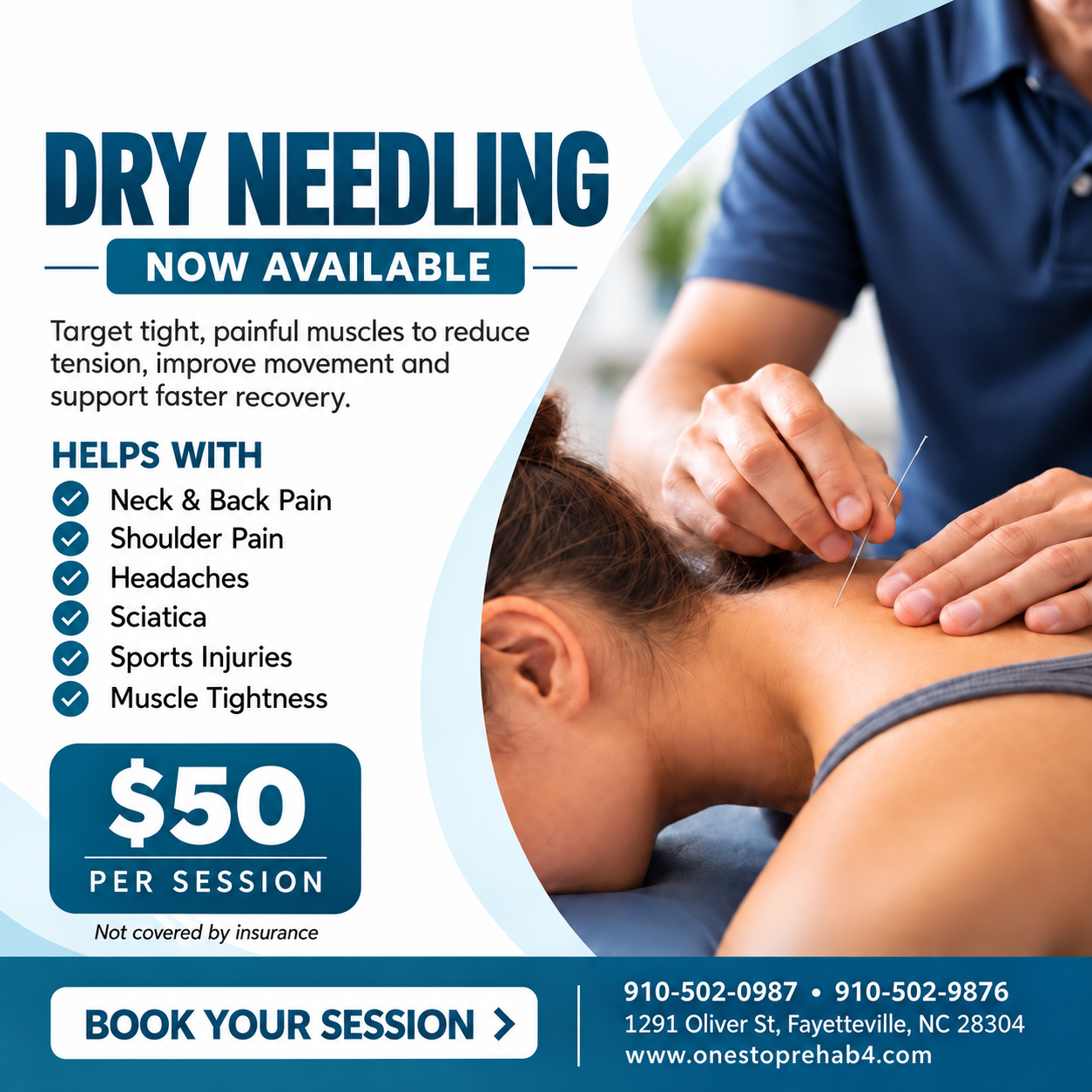
At One Stop Rehab, dry needling is offered as an adjunct to physical therapy to help address muscle pain, muscle tightness, trigger points, and movement limitations.
Dry needling uses a very thin, sterile, single-use needle that is inserted into selected areas of muscle and soft tissue. Unlike an injection, no medication or solution is injected into the body.
Your physical therapist will determine whether dry needling is appropriate for you based on your symptoms, medical history, physical examination, and treatment goals.
Dry needling is typically used together with other physical therapy treatments, such as therapeutic exercise, stretching, manual therapy, neuromuscular re-education, and movement training.
What Is Dry Needling?
Dry needling is a physical therapy treatment technique that uses a fine, sterile needle to target specific areas of muscle or soft tissue.
It may be used to address:
- Muscle trigger points
- Muscle tightness
- Localized muscle pain
- Myofascial pain
- Reduced range of motion
- Muscle-related movement restrictions
- Muscle soreness or tension
- Certain chronic or recurring musculoskeletal pain conditions
The goal is to help decrease muscle sensitivity and improve movement so that you can participate more effectively in your rehabilitation program.
Dry needling is not acupuncture, although both techniques use thin needles. Dry needling is performed based on a physical therapist's musculoskeletal examination and treatment plan.
Who May Benefit From Dry Needling?
Dry needling may be considered for patients experiencing:
Neck & Shoulder Problems
- Neck pain
- Muscle tightness
- Shoulder pain
- Upper trapezius tightness
- Muscle-related headaches
- Limited neck or shoulder movement
Back Problems
- Low back pain
- Muscle tightness
- Muscle spasms
- Myofascial pain
- Certain movement-related back problems
Hip & Leg Problems
- Hip pain
- Gluteal muscle tightness
- Muscle trigger points
- Certain knee-related muscle problems
- Muscle tightness affecting movement
Sports & Activity-Related Problems
- Muscle tightness after physical activity
- Repetitive-use injuries
- Muscle-related pain
- Difficulty returning to normal activity
- Certain sports-related musculoskeletal conditions
Dry needling is not appropriate for every condition. Your physical therapist will determine whether it is appropriate as part of your individual treatment plan.
What Can Dry Needling Do?
Depending on your condition, dry needling may help:
- Decrease muscle pain
- Reduce muscle tightness
- Improve mobility
- Improve range of motion
- Reduce sensitivity in painful muscles
- Improve muscle function
- Help you move more comfortably
- Make it easier to participate in therapeutic exercise
Research supports dry needling as one possible treatment approach for certain musculoskeletal conditions, but results vary from person to person. Dry needling should be viewed as one part of a comprehensive physical therapy program, rather than a stand-alone cure.
What Should I Expect During a Dry Needling Session?
Before treatment, your physical therapist will:
- Review your symptoms and medical history.
- Perform an appropriate physical examination.
- Determine whether dry needling is appropriate.
- Explain the procedure and potential risks.
- Answer your questions.
- Obtain your consent before treatment.
During treatment, your therapist will use a sterile, single-use needle and carefully place it into the selected treatment area.
You may feel:
- A small prick when the needle enters the skin
- A brief twitch or muscle response
- A sensation of pressure
- A mild ache
- A temporary feeling of muscle relaxation
Some patients experience little discomfort, while others may feel more sensitivity depending on the treatment area and condition.
What Happens After Dry Needling?
It is normal to experience some temporary soreness following treatment.
You may notice:
- Mild muscle soreness
- Tenderness at the treatment site
- A feeling similar to post-exercise soreness
- Mild bruising
- Small amounts of bleeding
Post-treatment soreness commonly resolves on its own, often within approximately 24–48 hours.
Your physical therapist may recommend gentle movement, stretching, exercise, hydration, or other appropriate activities following treatment.
Possible Side Effects & Risks
Dry needling involves inserting a needle through the skin, so there are potential risks.
Common or Minor Side Effects
These may include:
- Temporary soreness
- Temporary increase in pain
- Mild bleeding
- Bruising
- Temporary muscle fatigue
- Mild dizziness
- Temporary lightheadedness
- Temporary headache
- Nausea or feeling faint
Minor adverse events such as bleeding, bruising, and temporary pain are among the most commonly reported effects.
Rare but Serious Complications
Serious complications are uncommon, but they can occur with any procedure involving needle insertion.
Depending on the treatment location, rare complications may include:
- Infection
- Significant bleeding or hematoma
- Injury to underlying structures
- Nerve injury
- Broken or retained needle
- Pneumothorax (collapsed lung), particularly when treating areas near the chest
- Other complications related to the anatomy of the treatment area
A recent 2026 systematic review found that major adverse events associated with dry needling are uncommon, although rare serious complications have been reported.
Your physical therapist will consider your medical history, the treatment area, and relevant anatomy before performing dry needling.
When May Dry Needling NOT Be Appropriate?
Dry needling may not be appropriate for everyone.
Tell your physical therapist if you:
- Take blood-thinning medication
- Have a bleeding or clotting disorder
- Have an active infection
- Have an open wound in the treatment area
- Have a significant medical condition that may affect healing
- Are pregnant or think you may be pregnant
- Have significant needle sensitivity or fear
- Have recently undergone surgery
- Have any medical condition that may affect whether dry needling is safe
Your physical therapist will review your individual situation before treatment.
Never hesitate to tell your therapist about medications, medical conditions, pregnancy, allergies, or other health concerns before receiving dry needling.
Frequently Asked Questions
Is Dry Needling Covered by Insurance?
Insurance coverage for dry needling varies by insurance plan and payer.
At One Stop Rehab, dry needling is available as a self-pay service for $50 per session.
Dry Needling Self-Pay Rate
$50 per session
Because insurance coverage can vary, patients should discuss coverage and payment questions with our clinic before treatment.
Why Choose One Stop Rehab?
At One Stop Rehab, we believe successful rehabilitation involves treating the whole person—not simply the painful area.
Dry needling may be incorporated into your physical therapy program when clinically appropriate.
Our goal is to help you:
Move better. Feel better. Get back to the activities you enjoy.
Movement is Medicine.
Important Patient Information
Dry needling is an invasive physical therapy technique and is not appropriate for every patient.
Before treatment, your physical therapist will evaluate whether dry needling is appropriate for you and will discuss potential benefits, risks, alternatives, and expected outcomes.
The information on this page is intended for general educational purposes and does not replace an individual evaluation or medical advice.
If you have questions about whether dry needling may be appropriate for you, please speak with a physical therapist at One Stop Rehab.
One Stop Rehab
Movement is Medicine